Built to keep producing on the days everything else stops.
Eleme, Rivers State. A livestock campus designed as one integrated system — power, water, security and staffing included in the design rather than added when they became a problem.
- layer birds in production
- 976layer birds in productionExpanding to 2,000 birds by Q4 2026
- purpose-built pig pens
- 70purpose-built pig pensLow-odour design, sawdust bedded
- solar-backed power & water
- 24/7solar-backed power & waterSolar array + on-site water storage
- daily egg collection
- 2×daily egg collectionGraded and date-marked on site
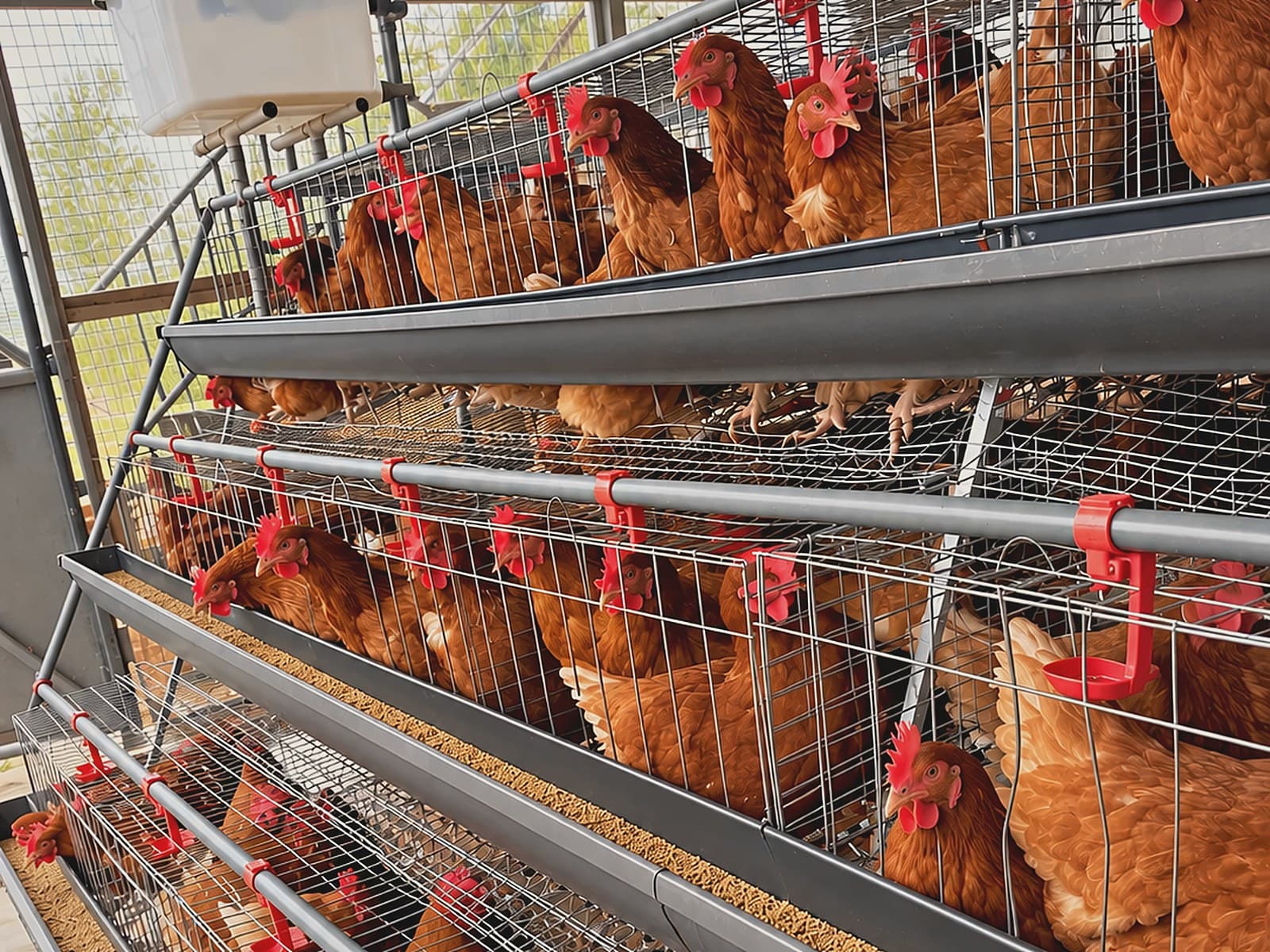
The layer house
Twelve semi-automated three-tier cage units fitted with cup-and-nipple drinker systems, currently running a flock of 976 layers. The frames are 16mm anti-rust TMT rod with 2mm mesh — built to outlast several flock cycles rather than to hit a price point. Birds never stand on litter, and eggs never touch it.
The piggery
Seventy purpose-built pens: sixty-six at 10 × 11ft, two at 10 × 30ft, and two at 10 × 20ft, giving us the flexibility to house by growth stage rather than forcing every animal into the same box. The pens use a low-odour design with sawdust bedding and nipple drinkers.

Power and water
An on-site solar array and water storage with automatic pumping keep the farm running independently of the grid. This is not a backup arrangement bolted on afterwards — it is how the farm was designed, because in this market an unreliable utility is the most predictable risk there is.
Biosecurity
Perimeter and enterprise-level protocols, controlled entry, disinfection points at every house, and a written vaccination and health schedule. Visitors are managed, not merely welcomed. The piggery protocol extends from the poultry one on the day stock arrives.
Every day is logged. Every log is reviewed.
Three people run this farm. That only works because the work is written down, not remembered.
Daily logs
Feed issued, water consumed, eggs collected, mortality recorded — every single day, by the person who did the work.
Benchmarked, not guessed
Production and feed conversion are compared against published ISA Brown performance standards week by week, so drift shows up in days.
Written SOPs
Documented standard operating procedures for routine work, so standards do not depend on who is on shift.
Health schedule
Vaccination and health checks run to a written calendar, with veterinary support on call for anything outside routine.
Continuous monitoring
CCTV across the campus, twenty-four hours a day, with residential staff on site.
Reviewed by the owner
The records are read, not filed. Decisions about feed, flock age and depopulation are made from data, not impressions.